
Introduction
Nova Scola Education has continuously evolved over centuries, adapting to societal needs, technological advancements, and cultural changes. In recent years, a term that has gained attention in educational discussions is “Nova Scola.” While it may sound like a specific institution or brand, it is more accurately understood as a concept rooted in modern learning philosophies. Derived from Latin, “Nova Scola” translates to “New School,” symbolizing a progressive approach to education that moves beyond traditional methods.
This article explores the meaning, origins, principles, applications, and significance of Nova Scola. It also examines how this concept aligns with current global trends in education and why it matters for students, educators, and institutions.
Meaning and Origin of Nova Scola
The term “Nova Scola” originates from Latin:
- Nova = New
- Scola (or Schola) = School
Together, the phrase literally means “New School.” Historically, Latin has been widely used in academic and scholarly contexts, which gives the term a formal and intellectual tone. However, Nova Scola is not tied to a single organization or official educational system. Instead, it represents a broader philosophy of modern education.
The Concept Behind Nova Scola
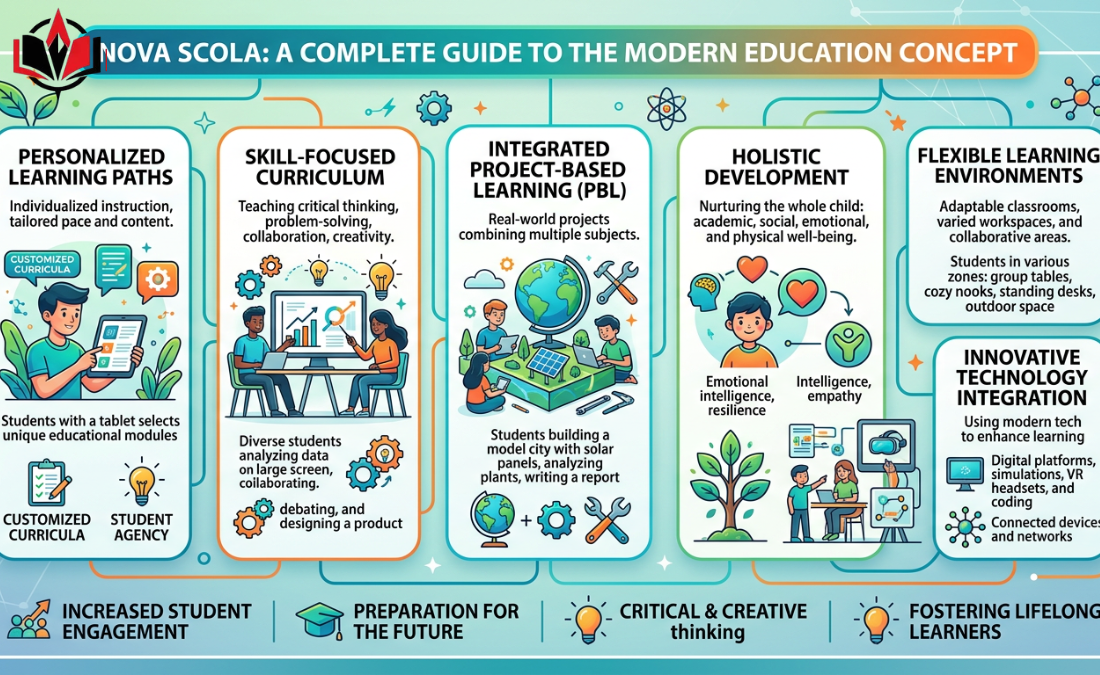
Nova Scola reflects a shift from traditional, rigid education systems toward more flexible, student-centered approaches. It emphasizes innovation, adaptability, and real-world relevance. The concept is built on the idea that education should prepare learners not just for exams, but for life.
At its core, Nova Scola promotes:
- Active learning instead of passive memorization
- Skill development over rote knowledge
- Individual growth rather than uniform teaching
- Integration of technology in education
This philosophy aligns with the changing demands of the modern world, where critical thinking, creativity, and adaptability are essential.
Key Principles of Nova Scola
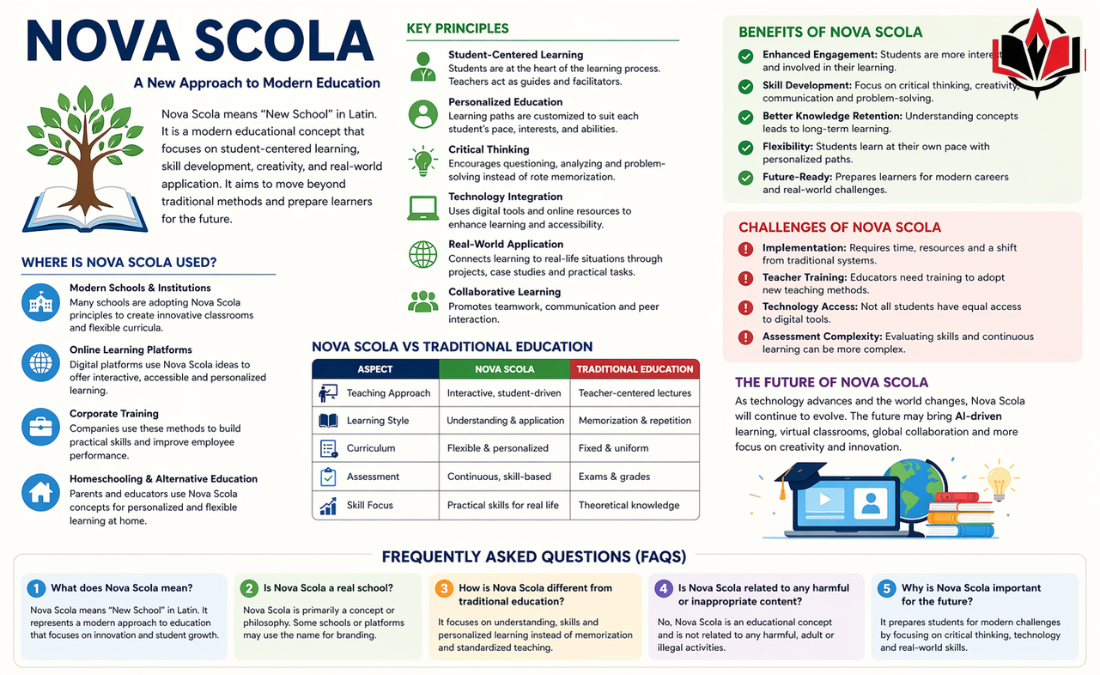
1. Student-Centered Learning
Traditional education often focuses on the teacher as the primary source of knowledge. Nova Scola reverses this approach by placing the student at the center of the learning process. Each learner’s needs, interests, and pace are considered.
2. Personalized Education
Every student learns differently. Nova Scola encourages personalized learning paths, allowing students to progress based on their abilities rather than following a fixed curriculum.
3. Emphasis on Critical Thinking
Instead of memorizing facts, students are encouraged to analyze, question, and evaluate information. This helps develop independent thinking skills.
4. Integration of Technology
Modern tools such as digital platforms, online resources, and interactive software play a major role in Nova Scola. Technology enhances accessibility and engagement.
5. Real-World Application
Learning is connected to real-life situations. Students work on practical projects, case studies, and problem-solving tasks that reflect real-world challenges.
6. Collaborative Learning
Group work and peer interaction are essential components. Students learn to communicate, cooperate, and share ideas effectively.
Nova Scola vs Traditional Education
Understanding Nova Scola becomes easier when compared to traditional education systems.
Teaching Approach
- Traditional: Teacher-centered lectures
- Nova Scola: Interactive and student-driven learning
Learning Style
- Traditional: Memorization and repetition
- Nova Scola: Understanding and application
Curriculum
- Traditional: Fixed and uniform
- Nova Scola: Flexible and personalized
Assessment
- Traditional: Exams and grades
- Nova Scola: Continuous evaluation and skill-based assessment
Skill Development
- Traditional: Limited focus on practical skills
- Nova Scola: Strong emphasis on real-world competencies
Applications of Nova Scola
1. Modern Schools and Institutions
Many schools around the world are adopting Nova Scola principles by redesigning their curricula, classrooms, and teaching methods. These institutions focus on innovation and student engagement.
2. Online Learning Platforms
Digital education platforms often reflect Nova Scola ideas. They offer flexible learning schedules, personalized courses, and interactive content.
3. Corporate Training Programs
Organizations use Nova Scola-inspired methods to train employees. These programs focus on practical skills, teamwork, and problem-solving.
4. Homeschooling and Alternative Education
Parents and educators who prefer non-traditional approaches often apply Nova Scola concepts in homeschooling environments.
Benefits of Nova Scola
1. Enhanced Engagement
Students are more involved in the learning process, which increases motivation and interest.
2. Improved Skill Development
Learners gain practical skills such as communication, critical thinking, and adaptability.
3. Better Retention of Knowledge
Understanding concepts rather than memorizing them leads to long-term knowledge retention.
4. Flexibility
Students can learn at their own pace, making education more accessible and inclusive.
5. Preparation for the Future
Nova Scola prepares students for modern careers by focusing on relevant skills and real-world applications.
Challenges and Limitations
Despite its advantages, Nova Scola also faces certain challenges.
1. Implementation Difficulties
Transitioning from traditional systems to modern approaches requires time, resources, and training.
2. Teacher Training
Educators need to adapt to new teaching methods, which may require additional training and support.
3. Technology Dependence
Access to technology is essential, which can be a limitation in underdeveloped areas.
4. Assessment Complexity
Evaluating students based on skills and continuous learning can be more complex than traditional exams.
Global Trends Supporting Nova Scola
The rise of Nova Scola aligns with several global trends in education:
- Digital Transformation: Online learning and virtual classrooms are becoming common.
- Lifelong Learning: Education is no longer limited to schools; people continue learning throughout their lives.
- Skill-Based Economy: Employers value skills and experience more than degrees alone.
- Interdisciplinary Learning: Subjects are integrated to provide a holistic understanding.
These trends highlight the relevance and importance of Nova Scola in today’s world.
Is Nova Scola a Brand or Organization?
One common question is whether Nova Scola refers to a specific company or institution. The answer is:
- It can be used as a name by schools or educational platforms
- However, it is not limited to a single entity
- It is primarily a concept or philosophy of modern education
Therefore, if you come across a website or institution named Nova Scola, it is important to evaluate it individually rather than assuming it represents the entire concept.
Is Nova Scola Safe or Legit?
Nova Scola itself is not associated with harmful, illegal, or inappropriate activities. It is an educational term and concept. However:
- If used as a brand or website name, always verify its authenticity
- Check reviews, credentials, and official information before engaging
In general, the concept of Nova Scola is safe, educational, and beneficial.
The Future of Nova Scola
As technology continues to advance and global needs evolve, Nova Scola is likely to become more influential. Future developments may include:
- AI-driven personalized learning systems
- Virtual and augmented reality classrooms
- Global collaboration among students
- Increased focus on creativity and innovation
The traditional classroom model is gradually being replaced by more dynamic and flexible learning environments, making Nova Scola highly relevant for the future.
Conclusion
Nova Scola represents a significant shift in the way education is perceived and delivered. By focusing on student-centered learning, practical skills, and modern technology, it offers a more effective and relevant approach to education. While challenges exist, the benefits and global trends strongly support its adoption.
In simple terms, Nova Scola is not just about a “new school” in name, but about a new way of thinking about education—one that prepares individuals for the complexities of the modern world.
Frequently Asked Questions (FAQs)
1. What does Nova Scola mean?
Nova Scola means “New School” in Latin. It refers to a modern approach to education that focuses on innovation, flexibility, and student-centered learning.
2. Is Nova Scola a real school or just a concept?
Nova Scola is primarily a concept, but some schools and platforms may use the name for branding purposes.
3. How is Nova Scola different from traditional education?
Nova Scola emphasizes understanding, skills, and personalized learning, while traditional education focuses more on memorization and standardized teaching.
4. Is Nova Scola related to any harmful or inappropriate content?
No, Nova Scola is an educational concept and is not related to any harmful, adult, or illegal activities.
5. Why is Nova Scola important for the future?
Nova Scola prepares students for modern challenges by focusing on critical thinking, technology, and real-world skills, making it highly relevant in today’s rapidly changing world.