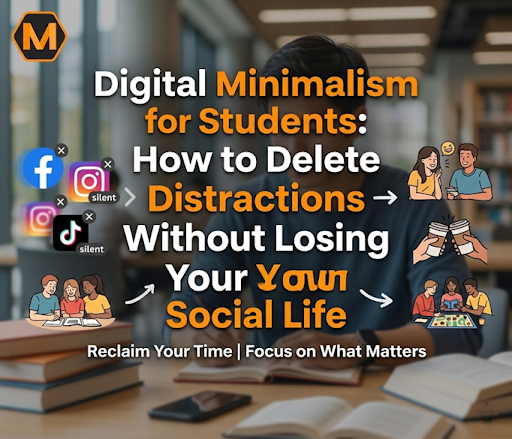
The modern college experience is often a whirlwind of notifications, pings, and the constant pressure to stay “connected.” For many students, the smartphone has transformed from a helpful tool into a source of digital fatigue. We are told that to succeed, we must be available 24/7—checking emails between classes, scrolling through group chats during lunch, and refreshing feeds before bed. But this “always-on” culture doesn’t actually lead to better grades or better friendships; it leads to academic burnout and a sense of isolation. True productivity isn’t about doing more things at once; it’s about having the clarity to focus on what matters.
Transitioning toward digital minimalism is a strategic move that helps you reclaim your time and mental energy. When you start focusing on your academic goals, you might find that certain technical subjects require a level of deep work that a distracted mind simply cannot handle. For instance, if you are struggling with complex technical projects, seeking an engineering assignment helper from myassignmenthelp can provide the necessary structure to manage your workload effectively. By delegating the heavy lifting of formatting and technical research, you free up the mental space needed to practice intentional social media use and engage more deeply with your campus community.
The Myth of the “Multitasking” Student
We’ve all been there: sitting in the library with five tabs open, a textbook on the desk, and a phone buzzing every thirty seconds. We tell ourselves we are multitasking, but science suggests otherwise. Our brains don’t actually do two things at once; they “context switch,” jumping back and forth between tasks. Every time you glance at a notification, it can take up to 23 minutes to get back into a state of “Flow.”
To break this cycle, you need to build Focus Habitats. A Focus Habitat is a physical space—like a specific corner of the library or a quiet cafe—where your phone is strictly banned. By physically separating your tech from your study space, you train your brain to recognize that this environment is for deep work only. This isn’t about being “anti-tech”; it’s about being “pro-intent.”
Why Our Brains Crave the Distraction
To defeat distraction, you must understand why your brain seeks it. Most social media apps are designed using “variable reward schedules”—the same psychology used in slot machines. You pull down to refresh your feed, not knowing if you’ll see a funny meme, a message from a friend, or nothing at all. This uncertainty triggers dopamine, making the act of checking your phone addictive.
When you are a student, the brain often seeks this dopamine hit as a temporary escape from the stress of a difficult assignment. However, this escape is an illusion. It leaves you with “attention residue,” where parts of your brain are still thinking about the last post you saw while you are trying to solve a calculus problem. By cutting out these micro-distractions, you allow your brain to enter a state of deep concentration that makes learning feel easier and more enjoyable.
Mastering the “Social ROI” Framework
One of the biggest fears students have when deleting apps is “FOMO” (Fear Of Missing Out). However, most digital interaction is “low-value” social activity. Scrolling through a friend’s vacation photos isn’t the same as having a conversation with them. To maintain a vibrant social life while cutting distractions, you should prioritize High-Value Connection.
Instead of spending two hours liking posts, schedule one hour of “Analog Socializing.” This could be a coffee date, a gym session, or a walk through the park. You will find that one hour of in-person connection is more fulfilling than an entire day of digital engagement. When you treat your social life with the same intentionality as your studies, you actually build stronger bonds while spending less total time on your devices.
Streamlining the Academic Pressure Valve
The stress of high-stakes writing projects often drives us back to our screens as a form of “productive procrastination.” We scroll because we are overwhelmed by the sheer volume of work. If you find yourself buried under the weight of specialized technical modules, utilizing Mechanical Engineering Assignment Help can act as a vital pressure valve for your schedule.
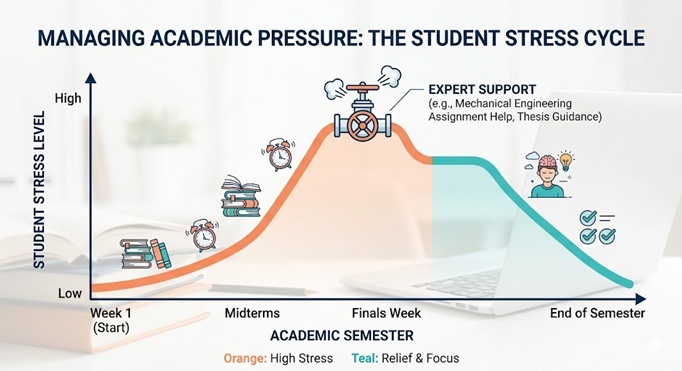
myassignmenthelp ensures that your technical documentation is handled with precision, allowing you to step away from the screen and enjoy your weekend without the dark cloud of a deadline hanging over your head. This level of support ensures that you aren’t just “busy,” but that you are actually making progress on your degree without sacrificing your mental health.
The Strategy of the “Digital Sunset”
The “Digital Sunset” is a habit where you turn off all blue-light-emitting devices 60 minutes before bed. This isn’t just about sleep hygiene; it’s about mental decompression. When you disconnect an hour before sleep, you give your brain time to process the day’s information. This is the perfect time for analog hobbies—reading a physical book, sketching, or journaling.
By implementing a digital sunset, you ensure that your last thoughts of the day aren’t shaped by an algorithm. You wake up feeling more refreshed and ready to tackle the day’s challenges with a focused mind. This habit, combined with smart delegation of your most difficult tasks, creates a lifestyle where you are the master of your technology, rather than its servant.
Strategic Time-Blocking for Students
To truly delete distractions, you cannot rely on willpower alone. Willpower is a finite resource that runs out by the end of the day. Instead, you need a system. Time-blocking is the practice of scheduling every minute of your day into specific “blocks” of activity.
How to Block Your Day for Success:
- Deep Work Blocks: 90-minute sessions for your hardest subjects (Math, Engineering, Science). No phones allowed.
- Shallow Work Blocks: 30-minute sessions for emails, quick chores, and organizing your notes.
- Social Blocks: Designated times for hanging out with friends or calling family.
- Buffer Blocks: 15-minute breaks to stretch and hydrate between tasks.
| Activity Type | Digital Status | Goal |
| Deep Study | Airplane Mode | Tackle complex theories and problem sets. |
| Socializing | Do Not Disturb | Build real-world memories and connections. |
| Admin Tasks | Online | Sort through emails and project deadlines. |
| Rest/Sleep | Device Off | Full mental recovery and cognitive processing. |
Reclaiming Your Attention Span
In the age of short-form video, our attention spans are shrinking. Many students find it difficult to read more than two pages of a textbook without feeling the urge to check their phones. This “brain rot” is reversible, but it requires practice. Think of your attention like a muscle.
Start by setting a timer for 10 minutes of pure focus. Once that becomes easy, move to 15, then 20. Within a few weeks, you’ll find that you can sit through a two-hour lecture or a long study session without feeling restless. This ability to focus is what separates the average student from the high-achiever.
The “Information Gain” Advantage in 2026
Google and academic institutions now prioritize “Information Gain”—the ability to provide new, unique insights that haven’t been repeated a thousand times before. If you spend all your time consuming the same digital content as everyone else, your work will look generic. By disconnecting and engaging with physical books, real-world conversations, and deep thought, you develop a “unique perspective” that algorithms can’t replicate.
When you submit a paper that has been professionally refined and reflects your own unique voice, you stand out to your professors. Digital minimalism isn’t a sacrifice; it’s a competitive advantage. It allows you to produce high-quality work while still having the energy to lead a social life that is rich, authentic, and completely offline.
How to Implement Your Tech Cleanse Today
Starting a digital detox doesn’t mean throwing your phone in the trash. It means auditing your digital clutter. Here is a practical guide to a mindful tech cleanse:
- The App Audit: Delete any app that doesn’t provide a clear, functional utility or a high-value social connection. If you haven’t opened it in two weeks, it’s clutter.
- Notification Zero: Turn off all non-human notifications. You don’t need a buzz to tell you a brand is having a sale; you only need to know when a person is trying to reach you.
- Gray-scale Mode: Turn your phone screen to black and white. This makes the colorful icons of social media look far less appealing to your brain.
- Analog Mornings: Do not touch your phone for the first 30 minutes of the day. Spend that time stretching, planning your day, or eating breakfast.
The Long-Term Impact of Mindful Technology Use
Choosing digital minimalism is about more than just getting better grades this semester. It’s about building a foundation for your future career. Employers in 2026 value employees who can think critically, solve problems without constant supervision, and communicate effectively in person. If you spend your college years buried in your phone, you miss the chance to develop these “soft skills.”
By taking control of your tech now, you are training yourself to be a leader. You are showing that you can navigate a world full of noise and still find the signal. This discipline will serve you long after you have graduated and moved into the professional world.
Final Thoughts for the 12th Grade Mindset
As you move through your academic journey, remember that your attention is your most valuable asset. Companies spend billions of dollars trying to steal it from you every single day. By choosing to “Delete the Distractions,” you are taking back control of your future. You can have the top-tier grades, and you can have the thriving social life—you just can’t have them if you’re constantly distracted.
Use the tools available to you to gain an edge. Whether it’s a productivity app that blocks social media during finals week or a service that helps you navigate a difficult engineering problem, use them to buy back your time. Once you have your time, spend it on the things that actually matter: your growth, your health, and your real-world connections. The screen will always be there, but these college years won’t. Make them count.
Frequently Asked Questions
How can I reduce screen time without feeling isolated?
Focus on quality over quantity by replacing aimless scrolling with scheduled, in-person interactions. Setting specific “tech-free” windows for deep work allows you to be fully present during social time, making your connections more meaningful and reducing the urge to check your phone constantly.
What is the best way to start a digital detox?
Begin with a small “digital sunset” by turning off all electronic devices one hour before bed. This simple habit helps your brain decompress and improves sleep quality. Gradually extend this by auditing your apps and disabling non-essential notifications that disrupt your concentration.
How does multitasking affect my academic performance?
Science shows that the brain cannot truly focus on two complex tasks at once; it simply switches back and forth rapidly. This “context switching” lowers your efficiency and makes it harder to retain information. Focusing on one task at a time leads to faster completion and better grades.
Can analog habits really help my digital productivity?
Yes. Engaging in offline activities like reading physical books or journaling helps rebuild your attention span. These habits train your mind to focus for longer periods without the need for instant digital gratification, which directly translates to better focus during long study sessions.
About The Author
Min Seow is a seasoned content strategist at myassignmenthelp, where she specializes in developing high-impact educational resources. With a focus on clarity and student engagement, she helps bridge the gap between complex academic concepts and practical learning success.