
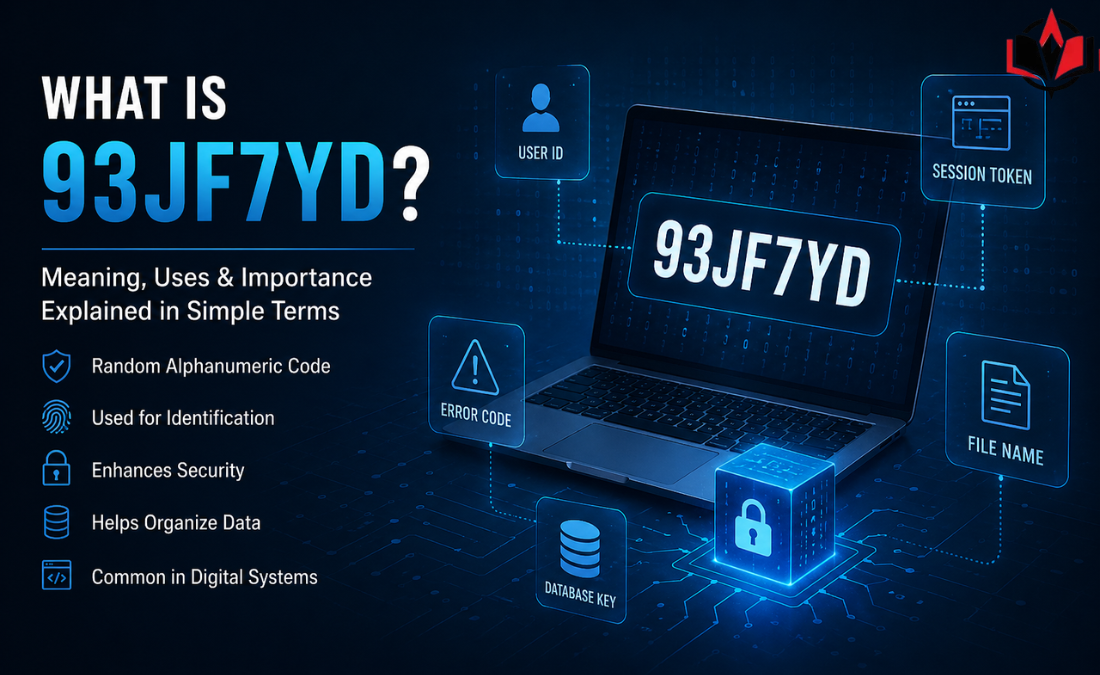
In today’s digital environment, strange combinations of letters and numbers often appear in unexpected places—URLs, error messages, file names, or system logs. One such example is “93jf7yd.” At first glance, it looks confusing and meaningless. However, while it may not have a dictionary definition or a widely recognized identity, it still plays a role in how modern systems operate.
This article explores what “93jf7yd” is, where it comes from, how it is used, and why such codes are common in technology. By the end, you will have a clear understanding of why you might encounter such a term and what it typically represents.
What Is “93jf7yd”?
“93jf7yd” is best described as a random alphanumeric string. It consists of:
- Numbers (9, 3, 7)
- Letters (j, f, y, d)
There is no linguistic meaning behind it. Instead, it is likely generated by a computer system or software for a specific technical purpose. These kinds of strings are very common in digital systems because they are easy to create, unique, and efficient for identification.
Why Do Random Strings Like This Exist?
Modern technology relies heavily on automation. Systems must handle millions of users, files, and processes simultaneously. To keep everything organized, computers generate unique identifiers. Strings like “93jf7yd” serve this purpose.
Key Reasons for Their Use
1. Uniqueness
Random strings help ensure that each item (user, file, or session) has a unique identity. This prevents confusion and overlap.
2. Security
Using random strings makes it harder for attackers to guess sensitive information, such as session IDs or access tokens.
3. Efficiency
Short alphanumeric codes are easy for systems to store, process, and retrieve quickly.
Common Uses of Strings Like “93jf7yd”
Although “93jf7yd” itself is not tied to a specific system, similar strings are widely used in various areas of technology.
1. User Identification
Websites and applications often assign users a unique ID. Instead of using names, they may use codes like this to avoid duplication.
2. Session Tokens
When you log into a website, the system creates a temporary session ID to track your activity. This ID may look similar to “93jf7yd.”
3. File Naming
Some systems automatically generate file names to avoid conflicts. For example:
- Uploaded images
- Temporary documents
- Cached files
4. Error Tracking
If an error occurs, the system may generate a unique code to identify it. This helps developers track and fix issues.
5. Database Keys
Databases use unique keys to store and retrieve records. Random strings are often used for this purpose.
Where You Might Encounter “93jf7yd”
You might see a string like “93jf7yd” in several situations:
1. URLs
Some websites include random strings in their links. For example:
example.com/page/93jf7yd
This usually points to a specific resource or record.
2. Error Messages
A system might display a message like:
“Error code: 93jf7yd”
This helps technical support identify the issue.
3. Emails or Notifications
Sometimes, automated emails include tracking IDs or reference numbers.
4. File Downloads
Downloaded files may have random names to avoid duplication.
Is “93jf7yd” Dangerous?
In most cases, no. It is usually harmless and simply part of a system’s internal operation. However, context matters.
When It’s Safe
- Appears in a trusted website URL
- Part of a system-generated file name
- Included in error messages
When to Be Careful
- Appears in suspicious emails
- Linked to unknown or untrusted websites
- Used in phishing messages
If you are unsure, avoid clicking on unfamiliar links or sharing personal information.
How Are These Strings Generated?
Random strings like “93jf7yd” are created using algorithms. These algorithms ensure that the string is:
- Random enough to avoid duplication
- Structured enough for the system to use
Common Methods
1. Random Generators
Systems use built-in functions to generate random combinations of letters and numbers.
2. Hash Functions
Some strings are created by converting data into a fixed-length code. This is often used for security purposes.
3. UUIDs (Universally Unique Identifiers)
More complex systems use longer identifiers, but shorter versions may look like “93jf7yd.”
Why Not Use Simple Names Instead?
You might wonder why systems don’t just use simple names like “user1” or “fileA.” The reason is scalability.
Problems with Simple Names
- Duplicate entries
- Easy to guess
- Limited uniqueness

Advantages of Random Strings
- Virtually unlimited combinations
- Harder to predict
- More secure
Real-World Examples of Similar Strings
While “93jf7yd” is just an example, similar formats are widely used:
- Social media post IDs
- Online order numbers
- Tracking codes for shipments
- API keys in software development
These all serve the same purpose: unique identification.
Can “93jf7yd” Have a Hidden Meaning?
In rare cases, a string like this might have a specific meaning within a particular system. For example:
- A company might use it as a reference code
- A developer might assign it to a test case
However, without context, it is simply a random identifier.
What Should You Do If You See It?
If you come across “93jf7yd,” follow these simple steps:
1. Check the Context
Where did you see it? A trusted website or a suspicious message?
2. Avoid Assumptions
Don’t assume it has a hidden meaning unless you have additional information.
3. Stay Cautious Online
If it appears in a suspicious link or email, do not interact with it.
4. Ask for Clarification
If it appears in a system message, contact support for more details.
The Role of Random Strings in Modern Technology
Random strings like “93jf7yd” are a small but essential part of modern computing. They help systems:
- Stay organized
- Maintain security
- Handle large amounts of data
Without them, managing digital systems would be much more difficult.
Conclusion
“93jf7yd” may look confusing at first, but it is most likely a random alphanumeric identifier used by digital systems. It does not have a universal meaning, nor is it tied to a specific concept. Instead, it represents a common practice in technology: using unique, system-generated codes to manage data efficiently.
Understanding these strings helps you navigate the digital world more confidently. The next time you see something like “93jf7yd,” you’ll know that it’s probably just a harmless piece of system-generated information doing its job behind the scenes.
FAQs
1. What does “93jf7yd” mean?
It does not have a specific meaning. It is most likely a random code generated by a system for identification or tracking purposes.
2. Is “93jf7yd” a virus or malware?
No, the string itself is not harmful. However, always check the context in which it appears to ensure safety.
3. Why do websites use codes like “93jf7yd”?
Websites use such codes to create unique identifiers for users, sessions, files, and database records.
4. Can I decode or translate “93jf7yd”?
No, it is not meant to be decoded. It is simply a randomly generated string without inherent meaning.
5. What should I do if I see “93jf7yd” in an email?
Check if the email is from a trusted source. If it looks suspicious, avoid clicking links or sharing personal information.