
Introduction
In recent years, the term “Ponadiza” has started appearing across various travel blogs, lifestyle websites, and online discussions. At first glance, it sounds like a real exotic destination—perhaps a hidden island, a remote European village, or an undiscovered travel gem. However, Ponadiza is not an officially recognized place on any map.
Instead, Ponadiza is best understood as a digital-era travel concept—a blend of storytelling, imagination, and modern travel philosophy. It represents how the internet is increasingly shaping the way people think about destinations, experiences, and tourism itself.
This article explores Ponadiza in detail, its meaning in travel contexts, why it is trending online, and how it connects to modern tourism trends.
What is Ponadiza?
Ponadiza is not a real geographical location. There are:
- No official coordinates
- No country or city registration
- No government or tourism authority recognition
Instead, Ponadiza is a constructed or conceptual term used in online content.
In travel-related discussions, it is often described as:
- A symbolic destination representing hidden travel experiences
- A fictional place used for storytelling in travel blogs
- A metaphor for “travel beyond traditional tourist routes”
So, rather than being a physical location, Ponadiza functions as an idea of travel freedom and exploration.
Is Ponadiza a Real Place?
The short answer is: No, Ponadiza is not a real place.
There is no evidence of its existence in:
- Global geographic databases
- Official tourism records
- Maps or satellite references
- Historical archives
Many travel-style websites describe Ponadiza in poetic or imaginative ways, but these descriptions are creative interpretations rather than factual geography.
This is why Ponadiza should be understood as a fictional or conceptual travel term, not a real destination.
The Origin of the Term Ponadiza
The exact origin of the word “Ponadiza” is unclear. It does not come from a known language root or historical reference. Instead, it appears to have emerged from modern digital content creation practices.
1. SEO and Content Creation Culture
In digital marketing, unique words are often created to:
- Rank in search engines
- Build niche travel content
- Attract curiosity-based traffic
Ponadiza may have originated from this type of content strategy.
2. Travel Blogging and Storytelling
Travel writers sometimes invent destinations to:
- Build immersive narratives
- Describe idealized travel experiences
- Represent “dream-like” locations
Ponadiza fits well into this storytelling style.
3. Internet Aesthetic Naming Trends
Modern internet culture often favors:
- Exotic-sounding names
- Soft, European-style phonetics
- Mysterious branding words
Ponadiza has exactly this type of linguistic appeal, making it feel like a real destination even when it is not.
Ponadiza as a Travel Philosophy
Beyond being a fictional name, Ponadiza is often used as a symbolic travel philosophy.
It represents a shift in how people approach travel today.
1. Travel Beyond Tourist Hotspots
Ponadiza symbolizes the idea of avoiding crowded destinations and instead exploring:
- Hidden villages
- Undiscovered landscapes
- Local cultural experiences
It reflects the growing desire for authenticity in travel.
2. Slow and Meaningful Travel
Instead of rushing through multiple cities, Ponadiza represents:
- Longer stays in one location
- Deeper cultural immersion
- Quality experiences over quantity
This aligns with the global “slow travel” movement.
3. Emotional and Inner Exploration
Ponadiza is also interpreted as internal travel:
- Self-discovery through journeys
- Emotional connection with places
- Travel as a form of personal transformation
Why Ponadiza Feels Like a Real Destination
Even though Ponadiza is not real, many people believe it sounds like a genuine place. This is due to several psychological and linguistic factors.
1. Natural Sounding Name Structure
The name “Ponadiza” resembles real place names found in:
- Southern Europe
- Eastern Europe
- Mediterranean regions
This makes it feel geographically believable.
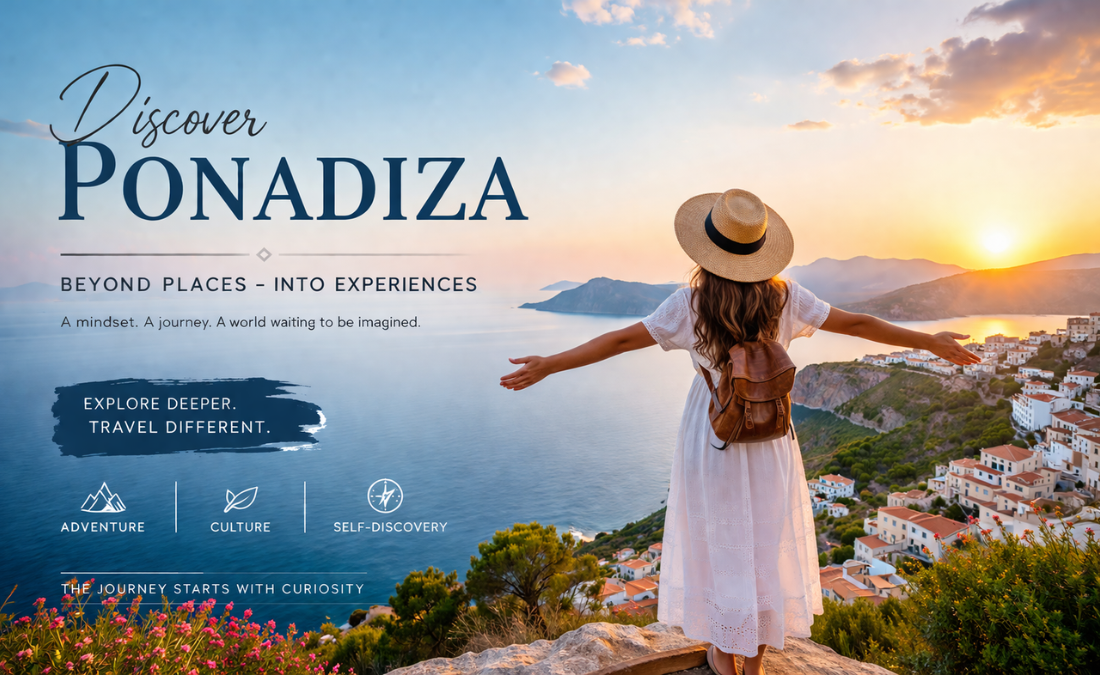
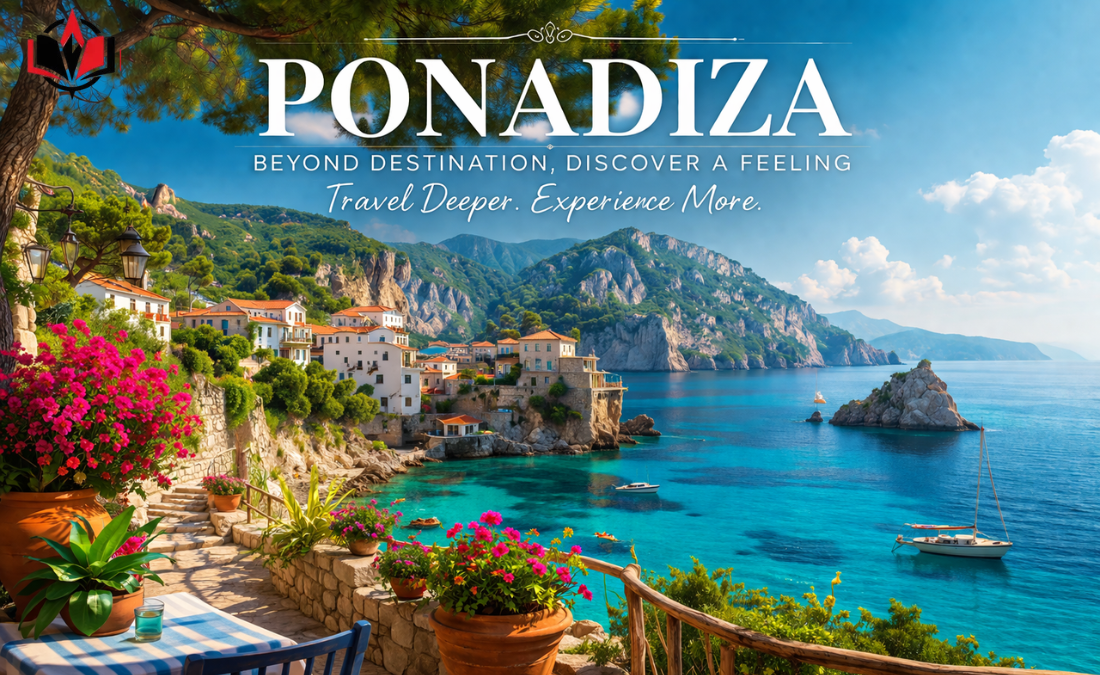
2. Travel Content Presentation
Online articles often pair Ponadiza with:
- Beautiful landscape images
- Beach scenery
- Mountain villages
- Luxury travel visuals
This visual context creates a false sense of reality.
3. Emotional Marketing Effect
The name triggers curiosity and imagination, which is a common technique used in:
- Travel branding
- Destination marketing
- SEO-driven storytelling
Ponadiza and Modern Digital Tourism
The rise of Ponadiza reflects a bigger trend in tourism: the blending of digital imagination and real-world travel behavior.
1. The Rise of Fictional Destinations
On the internet, not all destinations are real. Some are:
- Conceptual travel ideas
- AI-generated travel content themes
- Story-driven fictional locations
Ponadiza belongs to this category.
2. Influence of Social Media
Platforms like Instagram, TikTok, and travel blogs often:
- Enhance or exaggerate destinations
- Create viral “hidden places”
- Spread aesthetic travel concepts
Ponadiza fits perfectly into this visual-first travel culture.
3. Experience Over Geography
Modern travelers often prioritize:
- Feelings
- Aesthetics
- Experiences
over actual geographic accuracy. Ponadiza represents this shift clearly.
The Symbolic Meaning of Ponadiza in Travel
Ponadiza is increasingly used as a metaphor for:
Freedom
Travel without strict plans or boundaries.
Discovery
Finding places that feel untouched or unknown.
Imagination
Seeing travel as a creative and emotional experience.
Escape
Leaving behind routine life for something more meaningful.
In this sense, Ponadiza becomes less about geography and more about mindset.
Misinterpretations and Confusion
Because of its ambiguous nature, Ponadiza is often misunderstood.
1. Mistaken as a Real Location
Many readers assume it is a hidden travel destination.
2. SEO-Generated Misleading Content
Some websites present it as a real place to attract clicks.
3. Mixed Definitions
Different articles describe it differently:
- Travel destination
- Philosophy
- Fictional concept
- Branding term
This inconsistency creates confusion.
Critical Perspective on Ponadiza
While Ponadiza is interesting as a concept, it is important to remain realistic.
It is not:
- A real tourist destination
- A historical or cultural site
- A geographical region
It is:
- A creative internet concept
- A symbolic travel idea
- A modern storytelling tool
Understanding this distinction helps avoid misinformation.
Why Ponadiza Still Matters in Travel Culture
Even though it is not real, Ponadiza reflects important truths about modern tourism:
- People crave unique experiences
- Travelers want authenticity
- Digital media shapes travel expectations
- Storytelling influences destination popularity
Ponadiza shows how travel today is not just about places, but also about ideas and emotions.
Conclusion
Ponadiza is not a real destination, but it plays an interesting role in modern travel culture. It represents how the internet creates new “places” through storytelling, imagination, and digital content.
Rather than being a location on the map, Ponadiza is a symbol of exploration, curiosity, and freedom in travel. It reflects the growing trend where journeys are defined not only by geography but also by experience and perception.
In the end, Ponadiza is less about where you go—and more about how you think about traveling.
FAQs about Ponadiza
1. Is Ponadiza a real travel destination?
No, Ponadiza is not a real place. It is a fictional or conceptual term used in online travel content.
2. Where is Ponadiza located?
Ponadiza has no physical location and does not appear on any official maps or geographic records.
3. Why do people talk about Ponadiza as a destination?
Because some online articles describe it creatively as a hidden or symbolic travel location, even though it is not real.
4. Can I travel to Ponadiza?
No, you cannot travel to Ponadiza since it does not exist as a real-world destination.
5. What does Ponadiza represent in travel culture?
It represents imagination, freedom, and the idea of exploring beyond traditional tourist destinations.